Discover the best of Peru nature and archaeology with InkaNatura Travel. Includes detailed travel information, itineraries and photos from Tambopata National Reserve, Manu, the Inca Trail to Machu Picchu, Choquequirao, Chiclayo, The Lord of Sipan & The Royal Tombs of Sipan Museum, Tucume, Trujillo, Chan Chan, Chachapoyas, Lake of the Condors, the impressive Kuelap fortress , Mancora and Punta Sal.
Monday, May 03, 2010
Lima, Peru to have its first historic hotel-museum in 2011
Thursday, April 29, 2010
Peru: "Incan Empires" cruise includes Lima and Salaverry ports
Tuesday, April 27, 2010
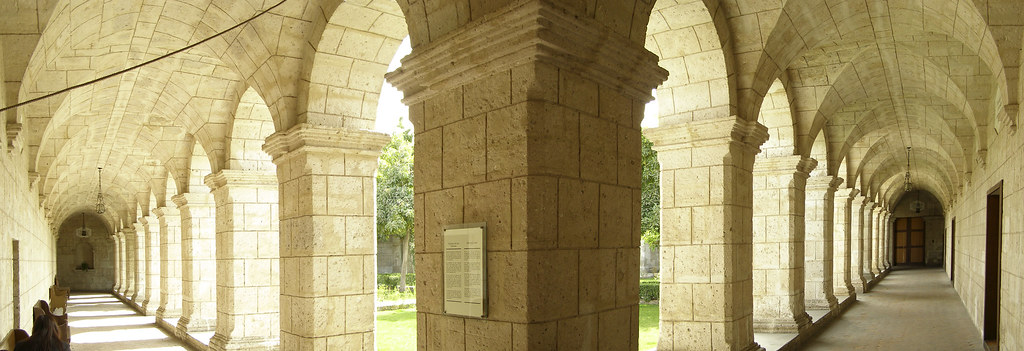
Churches of volcanic rock in Arequipa, Peru: Travel the religious route
Saturday, April 24, 2010
Peru eyes to double annual cruise ship arrivals
Paasengers od these cruise ships dock at Callao’s port take a tour around Lima city, but the idea is to make them visit other places such as Pisco (Ica) and Salaverry (La Libertad).
"In this way, tourists would stay longer. We will be addressing that issue in the coming months to attract tourists from around the world," he said.
Minister Perez will be heading to the United States in June to hold a meeting with Cruise Lines International Association (CLIA) and include those routes in the list of cruise ship destinations.
Minister Perez noted that Panama has already offered its support to Peru in this area as it is one of the world leaders in cruise business.
The 30 cruise ships that annually arrive into Peru's main ports contribute with an average 40 million dollars, this number is expected to double as the number of cruise ships arrivals increases.
These ships arrive between October and April with an average of 3,000 passengers who stay 12 days.
Friday, April 23, 2010
Relax and surf: Peru offers the beaches of Pacasmayo
For most people, the best beaches are way up north in Máncora. I agree, but it’s a long drive, 16 hours. I had only the weekend and a long bus ride wasn’t my idea of fun. So I was open to new ideas.
I went to buy a bus ticket and it was right there where I made a decision. The destination would be: Pacasmayo, about 10 hours from Lima. Pacasmayo seemed to be what I was looking for: a laid back beach town, not crowded, but still lively and most importantly sunny, warm and with an endless beach. The only thing I knew for sure about it was that there’s a huge cement factory called Cementos Pacasmayo. I was thrilled of the idea of discovering somewhere new!
Pacasmayo is recommended for experienced surfers. The best spot is El Faro beach.
Wave quality: World Class
Wave type: reef-rocky
Normal wave length: 300-500 meters.
Thursday, April 22, 2010
Peru to invite Sandra Bullock to boost tourism in Machu Picchu
Wednesday, April 07, 2010
Machu Picchu receives some 1,500 tourists daily since reopening
Most visitors are European -mainly French and British- and Latin American -Argentine and Brazilian. Domestic tourists are mainly from Lima.
"Visitors have great expectation of seeing Machu Picchu due to its status as one of the Seven Wonders of the World and the recent events," Palomino said adding that he noted the presence of families, young people and even seniors.
According to Palomino, the Institutional Image Department of the National Institute of Culture (INC) in Cusco will soon issue a statement with further information on the subject.
Heavy rains caused the Vilcanota River to rise to its highest level in 25 years, flooding roads and destroying the railway near the famous Inca citadel, which forced the closure of this tourist attraction for the past two months.
Wednesday, March 31, 2010
Machu Picchu reopening celebrated with “Payment to the Earth” ceremony
Friday, March 26, 2010
Machu Picchu, Amazon and Arequipa, best attractions of Peru, says The Telegraph
Wednesday, March 24, 2010
Lima’s zoo: Showcasing wildlife of the coast, mountains and jungles of Peru
The entrance of the park is still partially under construction, but it is already an active business spot: souvenirs, water and snacks, soft toys, sunglasses and parasols are offered to the visitors who arrive to queue under the sun to get the tickets. Considering solid sun protection for those who plan to spend the whole day in the open air is a must: Lima’s sun touches your skin rather gently, but at the end of the day, to your surprise, you appear as red as a boiled shrimp. Once you get your adult ticket of 9 soles, you are ready to enter the Parque de la Leyendas wondering what kind of legends it may actually contain.
The park has historical treasures which you can see at the Earnest W. Middendorf Museum set within the zone of ancient settlements of the pre-Incaic Maranga culture. The large archeological complex has 52 excavations called huacas, which date back 700 years.
Yes, the Park of the Legends is a lot more than just a zoo: It is a big recreation complex with numerous museums, the Botanic Garden of 3.3 hectares displaying 1,800 varieties of plants, both native and from all over the world; well-kept gardens and lawns, ponds full of fish, and exquisite artificial waterfalls. The alleys are equipped with comfortable benches where you can take a rest and contemplate the beauty of nature. But most of all it’s a wonderful exhibition of the animal world.
Costa: Lively parrots, bats and armadillos
This zone is rich in birds representing 33 kinds of species. Families of parrots of all sizes are dressed in most wonderful combinations of red, blue, yellow, azure, green and orange. They are noisy things, fighters too – and watching them settle their conflicts as well as witnessing scenes of love and care, you have a clear picture of what their life in the nature is like.
A couple of modest brown birds attracted my special attention. Their cage had glass walls and was designed with a beautifully shaped rock covered with plants and a cascade forming a tiny pool below. The secret of these privileged conditions was revealed when I noticed a board near the cage: the lucky couple was adopted by one of the country’s major mobile operators.
Walking through the alleys of costa surrounded with typical plants of this region, you’ll see penguins diving into a pool, a deer, two kinds of armadillos with their impressive impregnable shells, a tiny bat whose main activity is eating fruit at night and hiding in the daylight (though I did manage to see the animal), a chinchilla with its big ears and a gorgeous grey fur-coat, a white rabbit, a hypnotizing sleek python and many more. And it’s just the beginning of your journey.
Thursday, March 18, 2010
PromPeru proposes tourist attractions to enjoy during Holy Week
For this occasion, PromPeru has created its website “Semana Santa 2010” (Holy Week 2010) where one can find information about places, tourist destinations, accommodation, routes, services, among other interesting information that will help travelers.
As for Peru's Tourist Information and Assistance Service (Iperu) will offer tourist information to all national and foreign travelers through its offices located in many departments of Peru.
Wednesday, March 17, 2010
ABOUT EARTH HOUR
Earth Hour - Chile
In March 2009, hundreds of millions of people took part in the third Earth Hour. Over 4000 cities in 88 countries officially switched off to pledge their support for the planet, making Earth Hour 2009 the world’s largest global climate change initiative.
Earth Hour 2010 takes place on Saturday 27 March at 8.30pm (local time) and is a global call to action to every individual, every business and every community throughout the world. It is a call to stand up, to take responsibility, to get involved and lead the way towards a sustainable future. Iconic buildings and landmarks from Europe to Asia to the Americas will stand in darkness. People across the world from all walks of life will turn off their lights and join together in celebration and contemplation of the one thing we all have in common – our planet. So sign up now and let’s make 2010 the biggest Earth Hour yet!.
It’s Showtime! Show the world what can be done.
Earth Hour - Light Writing
Earth Hour by WWF
Earth Hour is organized by WWF. With almost 5 million supporters and a global network in over 100 countries, it’s one of the world's largest and most respected independent conservation organizations. WWF’s mission is to stop the degradation of the Earth's natural environment and build a future where people live in harmony with nature.
Earth Hour timeline
Turn back the clock on Earth Hour and discover why, how, where and when it all started.
Why get involved?
Put simply, because our future depends on it!
Earth Hour - Lima Group
Earth Hour has done a lot to raise awareness of climate change issues. But there’s more to it than switching off lights for one hour once a year. It’s all about giving people a voice on the future of our planet and working together to create a sustainable low carbon future for our planet.
The future can be bright
New economic modelling indicates the world has just five years to initiate a low carbon industrial revolution before runaway climate change becomes almost inevitable. But it can be done, and the long term benefits will be enormous.
So now's the time to take a stand and give world leaders the mandate they need to make the right climate deal.
Tuesday, March 16, 2010
Peru announces Machu Picchu reopening in April
Following the successful completion of track repairs ahead of schedule, it has been confirmed that, weather permitting, PeruRail will recommence its Vistadome train service to Aguas Calientes , the station for Machu Picchu Pueblo, on March 29.
The Inca Citadel of Machu Picchu will reopen to tourists on April 1, travelmole.com reports.
The train journey will take 1 hour 20 minutes and the drive approximately 2 hours 30 minutes.
PeruRail also operates a backpacker service and the luxury Hiram Bingham train between Cuzco and Machu Picchu.
The backpacker train will resume at the end of April and the Hiram Bingham will be back in operation at the end of June.
Wednesday, March 10, 2010
Tourists from Chile, US, France, Spain the most loyal to Peru
Suggested Peru Tours
Wednesday, March 03, 2010
Discovery Channel launches adventure-travel tour brand
The brand offers trips to destinations including Mexico, Costa Rica, Peru, the Amazon, the Galápagos, India, Thailand, Cambodia, China, South Africa, Morocco, Egypt, Alaska and the U.S. Southwest.
Itineraries range from cruises and safaris to exploring the ancient civilizations of the Incas, the Egyptians and Angkor Wat in Cambodia.
Tour themes tie in with places featured on Discovery Channel programs such as Man vs. Wild, Out of Egypt, Discovery Atlas, Dirty Jobs and Into the Unknown With Josh Bernstein.
Participants have opportunities to explore ruins and historic sites, as well as to do volunteer work in the destinations and experience local cultures. All trips are suitable for families.
Saturday, February 27, 2010
Peru among world’s most coveted destinationsPeru among world’s most coveted destinations
The US magazine Travel+Leisure published a list of dream trips in which Peru ranks among the most coveted destinations in the world. For this list, the magazine asked its nomads and the people who set tendencies to tell which their favorite destination was.
Peru got the 12th spot in the list which is led by Italy, followed by the Antarctic in second place, then India, New Zealand, among others.
Among the ones polled were the actress Lisa Kudrow, famous for her role as Phoebe in the sitcom Friends, fashion designer Roberto Cavalli and actor Andrew McCarthy.
Wednesday, February 24, 2010
Lima named culinary capital of the Americas
In its latest edition, Viajar mentioned that the fabulous fish and shellfish of the Pacific, besides the endless variety of potatoes, chilies, cereals, fruits and vegetables are ingredients that Peru has had since ancient times.
The Spanish magazine pointed out that an interesting feature of food and cuisine in Peru is the fusion of Chinese, Japanese and Creole dishes.
“Certainly, it's not new the combination of so many native products with the oriental cuisine, which since the XIX century, mixed their flavors with the Andean cuisine”, the magazine says.
In addition, Viajar declared the Peruvian chef Gaston Acurio as the ambassador of the Peruvian cuisine in the world.
“He is the owner of the restaurant Astrid y Gaston, in Lima and Madrid. Likewise he has branches of this restaurants in half a dozen South American capitals.”
“Thanks to the culinary talent of Acurio, followed by a last batch of innovative chefs, Lima has become the gastronomic capital of America and the Peruvian cuisine is venerated as one of the best in the world.”
The dishes
The magazine also mentioned that the best dishes of the Peruvian gastronomy are the different kinds of cebiche, the chupes de camarones, causa a la limeña, lomito saltado, aji de gallina, anticuchos, tiradito and the desserts like the “suspiro a la limeña”.
“All of them make the trip to Peru a first class gastronomic getaway”.
Thursday, February 18, 2010
Climate Change: Taking an active role in Peru to preserve the planet
Since 1990, the planet has seen its highest average temperatures ever. Peru is one of the most vulnerable countries to this because of the great amount of glaciers the territory has. And, as a response to that, various organizations are taking active roles of prevention.
International groups have created numerous approaches to counteract the effects of climate change. But to guarantee a positive result, they need to get people involved in this global matter.
So the question remains: Why isn’t everyone involved yet?
Levi Novey, a conservation professional and environmental journalist, says that “people sometimes feel that the challenge is hard because of their economic circumstances or the speed at which governments address environmental problems, (usually slowly).”
Although in Peru there are many organizations invested in promoting ways to prevent a radical climate change, Novey says the Environmental Ministry will be the primary catalyst for major efforts.
“The Minister of Environment, Antonio Brack, has already made significant efforts to secure international funding for anti-deforestation efforts that will help protect the Amazon,” said Novey.
As for nongovernmental groups, the Mountain Institute, for example, has been working on a project, since 2005, destined to provide educational tools to help tourists travel through the landscapes of Peru, in a more respectful and responsible way.
Another example of what organizations in Peru are doing is the work conducted by World Wildlife Fund in Peru.
With the campaign La Hora del Planeta (Earth Hour), WWF is organizing a worldwide event on March 27 that encourages Peruvians to turn off their lights and limit their electricity use for one hour, between 8:30 and 9:30 p.m. The goal: to draw attention about the effects of global warming.
Earth Hour had its first event in the country last year, when over 8 millions of Peruvians, from 40 different cities, turned off the lights of their homes.
“With last year’s results we happily confirmed that Peru had the biggest participation throughout Latin America,” said Teddi Peñaherrera, WWF Peru’s conservation director. “One of every three Peruvians, with access to electric energy, turned off their lights at the same moment,”
Wednesday, February 17, 2010
It's a devilish party in Puno: Virgen de la Candelaria Festival 2010
Puno’s Virgen de la Candelaria statue — Mary with a child in one hand and a green candle in the other — was brought from Spain sometime between 1580 and 1590. It is thought to have been made in Seville or Cadiz.
As the local story goes, in the 1700s, the Spanish rulers in Puno were under attack from an Inca uprising lead by Tupac Amaru. Some 12,000 men were gathered in the hills round Puno, many more than in the city itself.
The worried locals took the statue of the Virgin de la Candelaria out from the church for a long procession round the town, they say, coupled with dancing and loud music that lasted into the night.
The story goes that this put off the imminent attack, as the rebels left worried and unsure just how powerful and how many people were actually in Puno. Ever since, the Virgin is venerated and held high as the patron of Puno.
Today, the churches in Puno are decorated from ceiling to floor with huge cloth banners and thousands of flowers. In the centerpiece is the surprisingly small statue of the Virgin, which receives colorful new clothes for each year’s new fiesta.
On Feb. 2, the Virgin is taken out for a long procession round the town, as in the original legend, followed by a large band and a huge crowd. That morning, all the streets along the route are prepared for the event with huge images constructed out of colored wood and sawdust, or for greater respect and impact, completely out of flowers and chopped up plants.
As the statue of the Virgin passes over each image, flower petals are thrown over the statue for good luck. Some people had even constructed special boxes on the end of ridiculously long poles, so they could drop the flowers directly over the virgin herself from the first floor windows and balconies along the route.
I estimated there were in the region of 5,000 people involved during the procession, but this really is small compared to the main event, the colorful folk festival, which completely takes over the town and is just incredible. This starts on the next Sunday following the procession, with a huge dance and costume competition in the city’s stadium Torres Belon.
The competition started at 7 a.m. and although it officially ended at just after 6 in the evening, everyone spilled out onto the streets and continued into the night, drinking pisco, rum and homemade chica beer out of two-liter coke bottles, well into the early hours. At 5 a.m., I could still hear bands at from my hotel.
The Devil’s Dance
The former Miss Peru, Karen Schwarz, who in 2009 was the center of a controversy between Peru and Bolivia for wearing a Diablada costume, also attended the dance competition in her amazing costume. There was no complaints here, only huge cheers echoing round the hills.
|
The huge metal masks weigh so much that only the strongest people are able to play the part of the devil. I tried on a mask myself and could only walk about with it for two minutes before my neck complained and I had to give it back.
The Daddy of all parades
The “Grand Parade” takes place on the Feb. 9 and is the height of the festivities. The groups, which paraded in the stadium, the bands, together with many more groups from the neighborhoods, all return for a street procession in front of the Virgin, who will watch over them from a small tent erected especially for her, on the main street.
The entire city turns out, either taking part in, or watching over the five-kilometer parade through the city, starting from the shores of Titicaca and ending at the city’s cemetery. This takes between 4-6 hours depending on the crowd. Groups tiring and not putting in 100 percent are jeered, while those doing well receive food, beer and home made beer called chicha. That usually gets an extra special show, until one of the officials tries to get them moving down the street again.
José Huanca Tonconi, the regional tourism director in Puno, is also one of the dancers in the group Spectacular Morenada Bellavista, boasting an impressive 1,500 dancers and musicians. “According to the hotel figures in Puno, in February 2009 Puno received 19,424 visitors, of which 9672 were domestic tourists and 9752 were foreigners,” said Huanca. “And that’s not including the visitors staying with relatives and not officially counted.”
This year there was a noticeable lack of foreign tourists, as the floods of Cusco and closure of Machu Picchu had obviously affected many people’s plans. In the two weeks I only saw about two or three dozen foreigners, which is a huge shame.
Today the vast majority of costumes are made directly in Puno. Embroiderers say they have the capacity to meet demand for the dancers of the Candelaria as well as other festivities in the region. Candelaria for these artisans is like a huge fashion show, where they exhibit their innovative and creative work, and take on orders for the following year and other groups.
It’s Big Business, too! A single costume can cost several hundred dollars, which is a very large percentage of the annual salary in the region.
And with a dance group being several hundred people, the embroiderers have their work cut out for the year.
There has been a slow evolution of the costumes, with the most famous, the Diablada, started with just a few staggered embroidered figures, perhaps having some Inca history behind them. Today these costumes are embroidered with Chinese dragons and snakes, having a strangly Eastern mythology and flavour, which seems a bit odd, high in the Andes of South America. This has been a result of Japanese and Chinese immigrants, who began settling in neighboring Bolivia, and bringing their embroidery skills together with a mixing of their culture.
All parties come to an end
The final event of Candelaria, is a music parade with some 1,500 musicians and dancers, consisting of 15 sicuris groups, consisting of about 100 people in each band. The sicuris is a type of traditional panpipe, consisting of two rows of reed tubes, eight in the front row and seven in the lower second row.
Although the Virgen de la Candelaria festival officially ended on Wednesday, Feb. 10 with the sicuris parade, there are always groups that can been seen and heard in the main streets during the following weekend. This year too, with carnival being on the following weekend, the celebrations simply continue into one huge three-week party.
Tuesday, February 16, 2010
Machu Picchu reopens for tourists from April 1
"From April 1, we hope to receive millions of tourists as we used to," he said noting the progress made towards the rehabilitation of the railway line by the concessionaire operating the route.
Perez said the Vilcanota River’s flow, the cause of damage, has decreased significantly and has gotten back to normal for this time of year, enabling authorities to resume reconstruction works.
He also highlighted the response to the campaign “Cusco Pone”, which offers a round trip plane ticket to the Andean city of Cusco for 49 dollars, and promotes accommodation packages for three or four-star hotels for up to 70 soles.
The campaign 'Cusco Pone' (Cusco Rocks) was launched on Thursday through a joint effort between authorities and tourist operators in Lima and Cusco, by offering special prices in flight tickets and some hotels.
At least 8,000 visitors have visited Cusco so far. The campaign received response not only from Limeans, but also from tourists coming from Trujillo and Arequipa, especially workers of the public sector
Peru's Amazon gastronomy still yet to be discovered, cooks say
According to Edgardo Rojas, from the restaurant El Aguajal that especializes in Amazon gastronomy, there are many native fruits and vegetables that have been never tasted in Lima because bring here on time it's almost impossible, despite all the efforts to improve the roads.
He says that nowadays people is eager to try some Amazonian dishes because they are “exotic” and “tasty.”
Elía García, from La Patarashca in Tarapoto, said that some ingredients have yet to be discovered by Peruvian gastronomy, like the fruits known as humari and sinami.
“For example, we use cocona in our cebiche, and camu-camu has many other uses besides naking juices. There is a lot yet to discover,” she stressed.
However, Rojas warned that the Amazonian gastronomy requires also to take care of endangered species, since some restaurants offer dishes prepared with animals obtained from illegal hunting.
More info
About Gastronomy: Peru Mucho Gusto
About Tours in Amazon: Manu and Tambopata
Friday, February 12, 2010
PERUVIAN NORTHERN REGION IS AN OUTSTANDING PRODUCT FOR NON CONVENTIONAL TOURISTS
The Peruvian Northern Region, known in Spanish as Circuito Turístico Nororiental, constitutes the great opportunity to consolidate Peru as a premier tourist destination. According to Miriam Gayoso, the Manager of the CTN Project, a Non Profit Organization which is promoting and developing tourism in the zone, this area of Peru is ready to fulfill and even exceed the non conventional tourist´s expectations.
In this circuit, a tourist can find different types of attractions from astounding archaeological sites like Kuelap, Chan Chan, Huaca del Sol y de la Luna, El Brujo, Túcume Pyramids and Huaca Rajada to unparallel natural resources like Gocta Waterfall, Laguna de los Condores and Cumbemayo.
Miriam also affirms that a tourist can find world class museums such as Royal Tombs of Sipan, Lady of Cao, and Leymebamba. CTN Project has also conducted an intensive training program which finally permitted to certify more than 92 tourism companies (including hotels, travel agencies, and restaurants) in good practices of sustainability and quality service. Miriam Gayoso invites international tour operators to visit and include “The Undiscovered Kingdoms” in their tourism supply.
Suggest Tour:
Wednesday, February 10, 2010
Brazilian team preparing TV documentary about Peru
The production team of the Brazilian documentary TV program “Globo Reporter” is currently visiting the city of Trujillo, and also some other regions of Peru, recording all the good things that Peru offers to its visitors, both in the archaeological areas and in the culinary as well.
Reporter Helter Duarte, who has been capturing images and video for two weeks, says that "Peru is in fashion now, and not only in Brazil but worldwide," reports TNews.
He said that his team will continue the journey towards the north, since their plans to visit Cusco and Machu Picchu have been truncated after the rains that hit the area, one of the most frequented by Brazilians.
The recorded material include images of Caral, Paracas, Chan Chan, among others.
More info
An eating tour through Trujillo
Doña Panchita is visited even by the President for her famous deep fried pork. For over 30 years, this fine lady, mother of 10 children, prepares what for many is the best breakfast in Trujillo: a portion of pork cooked in a pot served with yucca, salad, coffee and two loaves of bread. On a good day she sells about 150 kilos, say one of her daughters and one of her daughters-in-law. “We are one big happy family united in this business thanks to these wonderful hands (Doña Panchita’s),” they say as they proudly show pictures of the authorities who visit them regularly. Most of them belong to the APRA party, they admit without hiding their sympathy with the party of the red star, although they make it clear that all are treated equally. With the same love.
Just like this place, located in block 5 of Spain Avenue, others have become a reference point for those who know good food. One of them is undoubtedly the Salon de Te Buenos Aires. Dozens of people enter and exit this place on block 3 of Jiron Pizarro (half a block from the Plaza de Armas in Trujillo) with a smile that says it all. Their sandwiches are delicious, especially the turkey sandwich. Unbeatable. Doña Carmen Maeshiro runs this place that has existed for 67 years. It is almost an institution. When asked about the secret sauce that accompanies the turkey, this lady gracefully changes the subject. Her workers do not know. At first glance, it contains Chinese onion. Other than that, we can say very little but enjoy very much.
For breakfast, these two locations, plus others like El Rosado, San Agustin, D'Marco and Asturias, in the Historic Center of Trujillo, are the most prominent. For lunch, the offer is multiplied and many cooks come out to fight for their customers with spoons in hand. Doña Peta earned a name for the delicious duck that they prepare. This is a true stew dish that is well-served – as one deserves – and accompanied by rice, cassava and beans. Due to that quality, they now have three locations (the two main ones on Daniel Alcides Carrion Avenue and another one right at the exit used when heading north) that do not close any day of the week, to avoid neglecting its most loyal guests.
Another place that managed (in its 12 years of existence) a place on the agenda of the people in Trujillo is Danielita. Cebiches like the ones served there, always guarded by a good portion of beans, are not found in any restaurant. It is also the winner in terms of requirements that demand those with big bellies: good, pretty, cheap and in great amounts. It's outrageous to leave Danielita, located in block 8 of the Husares de Junin street, without trying its steamed fish with a northern flavor or the choritos a la chalaca in a sauce similar to Huancaina.
Very close to Danielita, on the second block of the Cienfuegos Street, is Squalos. This restaurant, which counts with the experience of two restaurants owned by the same family which are Rincon Romano and Rincon Romano Criollo, is the most demanded of the city. Its dishes are, regarding presentation and taste, a delight. Elena is the one that manages the place; she is the conductor. She moves from side to side, making the entry and exit of the waiters more smooth. Succulent tiraditos, cebiches, picantes and the two dishes that are their trademark: a tacu tacu with beef a lo Squalos and "Huando" goat (boneless) served with yucca, rice and salsa criolla appear from the kitchen. Incredible.
These are some recommendations for a weekend, but if you come for more days and have time you can escape to Huanchaco or Moche and taste the food that these places have to offer. In the center you could also visit Mochica, Rustica, Mar Picante, Paisa, La Sirenita, Pollos Bolivar, La Toscana and Mollejitas de San Andres. These are several places that will surely be cause for another hearty walk.
More Info: About Trujillo
Source: El Comercio News
Monday, February 08, 2010
Lima ranks sixth best destination for business travelers
The ranking is led by Miami (USA), followed by Santiago (Chile) with 33.7%, Buenos Aires (Argentina) in the third place with 31.8%, Sao Paulo with 25.6%, and Ciudad de Panama in fifth place (Panama) with 22.4%.
According to this survey, Lima has the sixth best financial district, San Isidro (17%) and the third best bohemian district, Miraflores (22.1%.); in addition, Peruvian Pisco Sour is the 4th best drink for business travelers, and Lima ranks the second best city to eat in Latin America
Source: Living in Peru.com
Thursday, February 04, 2010
PISCO : The history
The conditions for preparation of pisco were established centuries earlier by smart Inca engineers between Ica and Moquegua regions on the southern peruvian coast. This area has a dry, infertile and desert weather when the Spaniards arrived in the 16th century. The Inca civil engineering set foundations of future farming, harvest and cultivation of grapes in the Ica-Moquegua region. The Spaniards followed and tracked clues left by Inca emperor Pachacutec and channeled andean river waters to where they planned to cultivate their vineyards and other fields.Henk Milne (a north american historian) and her staff described the long legend Incan of Pachacutec:
Before Spaniards discovered America, Inca emperor Pachacutec offered his hand (and his kingdom) in marriage to a fair and beautiful maiden from the Peruvian mountains and was rejected in favor of her plebeian and current boyfriend, he might have been punished for being chosen, but instead of pressing over the making of his desire by, say, imprison the rival and go after on the nuptials, or other similar simple and monarchical solution so common in those times, he gave in gracefully. He offered the woman to grant her dearest wish. She, said that her wish was that the waters of the rivers be brought to her village in the middle of the desert. 15 days later, 40,000 workers wiped theirs brow, pusking all the shovels and sat down beside the 50-kilometer canal they had dug. The Inca Supreme Panjadrum dubbed this artificial and hand-worked waterway: "Achirana".This Achirana provided the Spaniards with sufficient water to plant several seeds and vineyards with the Quebranta grape in 1548. These vineyards were so fertile that within less that 12 years, Peru exported grapes and wine to Argentina, Chile, Spain and other countries. In the Ica region flourished over 150,000 acres of vineyards. The cultivation of the grape in L. America was a result of Ica's success and it is believed that other kinds of grapes as Criolla of Argentina and the Pais of Chile are direct descendants of the Negra Quebranta grape originally brought over to the new world (America) by the Spaniards.
Incan people had a favorite drink called Chicha, a purple-colored made from aged corn and water. This beverage was a ceremonial alcoholic drink for Inca people and could be made only by beautiful women, the called "chosen ones."
One of the main occupations of those "chosen women" was the preparation of this alcoholic chicha for the Inca lord and his nobles, and its making process required the crushing of the different types of corn after it had been boiled. Many hours of crushing was demanded because much chicha was drunk by the people. Drunkenness was required at Incan festivals and ceremonies, since the liquor of corn was as sacred as the seed they named "life giver". No meeting or ceremony began without the Inca lord or board of priest pouring this chicha on the ground to honor and praise the corn goddess: Mama Sara.
The Spaniards, at this time, craved their spanish brandies. "The found through trial and error that there was a grape called Quebranta that produced a pure, highly potent, pure, tasty and aromatic brandy which in the future became known by the port from which it was widely exported to demanding drinkers abroad: Pisco.
This drink is the current national drink of Peru and comes mainly in two sorts: “sipping” for the palate without blends or additives and there are more fine ones and “rough” best used for preparing the famous Pisco Sour.
Wednesday, February 03, 2010
Peru: Machu Picchu Pueblo Mayor claims it is "not chaos"
Machu Picchu Pueblo Mayor, Edgar Miranda, said that his office is dedicated to restoring the order in the area, and that, like many other districts in Peru, Machu Picchu is prone to suffer from climatic events and natural disasters.“We are working in organizing the town, asphalting streets, supervising constructions, and we expect to uniformize the ceilings and the colors of the houses,” said Miranda, quoted by TNews.
He said that during the last days media attention has been focused on the “inability” and “inaction” of local authorities regarding preparedness for disasters, but he said that this topic is included in Mayors' agendas.
“It is not correct saying that Machu Picchu is a chaos. We are a district that provides services, and in recent years it's been an improvement in these services' quality,” added Miranda.
He also remarked that now the works are focused on restoring the road between the town and Puente Ruinas, the train station: “this might take up to 20 days,” he said.
Resource: Living in Peru
Monday, February 01, 2010
Paijan and the Legendary Peruvian Paso Horse
Generally though, you’re not missing much if you drive through the towns without stopping. Most are characterized by what seems like one never-ending solid wall of colorless cinderblock buildings punctuated by the occasional gas station.
From the Panamericana, Paijan might at first appear to fit this description. But if you turn off the highway and into the old colonial core, you will find a real gem of a town.
Paijan has a surprisingly long history. It was founded by the Spanish in 1540, and the pre-colonial history of the area goes back much further. The nearby temple compound of Las Huacas del Sol y Luna attest to the sophistication of the pre-Colombian culture and is definitely worth a visit, as is Chan Chan, a nearby archeological site that holds the distinction of being the world’s largest adobe city.
Within Paijan itself, the traditional Plaza de Armas is a pleasant place to stop for an ice cream or a Coke. The plaza has a series of well-manicured gardens separated by wrought-iron fencing and park benches, and despite the bustle of the town it is surprisingly peaceful.
Still, Paijan is most famous today for the reputation of its Peruvian paso horses, bred by the local Vásquez family.
The Vásquez clan, led today by brothers Luis Vásquez Nacarino and Anibal Vásquez Nacarino, is a virtual horse breeding dynasty, and the collective influence of the family over the past 30 years has been nothing short of phenomenal. (I will admit, I am a little biased here. Luis Vásquez is my father-in-law. The numbers, however, speak for themselves. Mares bred by the Vásquez family won the National Champion of Champions prize fifteen times in a twenty-three year period and a record eight years in a row in the 1970s. Not a bad run, indeed.)
Luis and Anibal are carrying on the legacy of their father, the late Anibal Vásquez Montoya, who was a breeding legend in his own time, and have raised their own sons to carry on the tradition into the next generation. For the sake of the breed, let us hope they are successful.
For readers unfamiliar with the Peruvian paso, the horse is one of the most graceful animals to ever walk the earth. Bred in virtual isolation for over 500 years from an original breeding stock left by the Spanish conquistadors, the Peruvian has developed into a breed with several distinguishing characteristics.
The Peruvian is one of the few breeds in the world that has a four-beat gait; its hooves touch the ground in an evenly-spaced 1-2-3-4, 1-2-3-4 pattern (Most other horse breeds trot, meaning they walk with a 1-2, 1-2 hoof pattern that tends to make the rider bounce in the saddle.) Among the gaited breeds the Peruvian is generally considered to be the smoothest to ride. You can ride a Peruvian horse with a drink in your hand and not worry about spilling it.
Interestingly, the gait is not learned; it is bred. Peruvians are born with their distinctive walk.
Another characteristic of the gait is the action in the forelegs called término. This is something you really must see to understand. But to give you an idea, Peruvian horses walk with a distinctive high step in the forelegs that almost resembles a swimming motion. That the horse is able to walk with this flair while still keeping the saddle stable is truly testament to the quality of the Peruvian’s breeding over the centuries.
The Peruvian’s disposition is also noteworthy. The breeders call it brio, and unfortunately this is one of those Spanish words that doesn’t translate well into English. The literal translation is “sprit,” but this definition doesn’t fully reflect the meaning of the word. It’s more like that “special something” in the horse’s personality that you can’t explain.
Ernest Hemingway — who wrote his masterpiece The Old Man and the Sea in Cabo Blanco, Peru, by the way — had his own complaints about Spanish words that didn’t translate well into English. When writing about bullfights in Sun Also Rises, he laments that there are no fitting equivalents for afición or aficionado, which literally translate into the rather prosaic “fondness” and “fan” in English, respectively.
As Hemingway would have told you, afición means something much deeper than “fondness.” It is more of a profound appreciation and respect for something. And an aficionado is much more than a “fan”; he is a person who understands and appreciates something on a more complex level and who can see the intricate subtleties and shades of gray. Basically, if you can explain what you feel in words, then you’re not really an aficionado.
Certainly, not all fans of the Peruvian paso horse can legitimately be called aficionados. I certainly cannot make that claim for myself at this stage. But I am looking forward to the 2010 Concurso Nacional this coming April in Mamacona, outside of Lima, and I encourage any readers who are interested in seeing a unique aspect of traditional Peru to attend.
Fuente: Living in Peru