Monday, May 17, 2010

Peruvian gastronomy to be featured on French Television

A 52-minute report on Peruvian gastronomy, which is attracting the world's attention, will be aired in the second half of the year on French television.
According to “I Triping” blog, French TV production company Gedeon sought the support from the Tourist Service Department at the Peruvian Consulate General in Paris.
Likewise, some reporters of this program are already in Peru visiting cities such as Lima, Cusco, Puno, Arequipa, Iquitos and Tumbes.
Its broadcast will air during the second half of 2010 on a program called Le Globe Cooker, world's cuisine explorer TV show hosted by Frederic Chesneau.
“It is rewarding to observe the increasing interest in Peru and our cuisine in France. By supporting these kinds of initiatives of some production companies, we have encouraged others to discover our gastronomy and traditions,” tourism attache of Peruvian Consulate-General in Paris Maria Elena Corvest pointed out.

Friday, May 14, 2010

Dolphins in Peru: A local NGO sees tourism as the way to conservation


How many times have we watched the marvelous leaps between waves by dolphins in Peru's ocean? Something that seems so natural to us is very rare in foreign seas. The German biologist Stefan Austermühle has studied these marine mammals the past four years in Peru, which gave him the idea of an activity to promote the conservation of dolphins and improve the fishermen’s lives: dolphin watching.

Few know that Peru is a privileged country in regards to dolphin watching: while at other latitudes, the possibilities of seeing a dolphin after traveling one kilometer of coast are slim, a few miles off the beaches from Chorrillos to Paracas, you can easily find three or six dolphins. Stefan Austermühle has counted them. Not only that: As if he were managing a personal register system, he constantly photographs their fins and identifies them by their cuts or scratches.

Ever since he began counting, Austermühle has accumulated over 70 thousand pictures of fins of bottlenose dolphins, or tursiops truncates, the official name. “There are 1,512 dolphins that can be seen in this part of the coast,”  he says. “Six hundred of them live here permanently. The problem is that there is a black market for dolphin meat.”

A love for animals
Stefan Austermühle is not new to the issue. When he was 18 and a student in Germany, he joined the Greenpeace. He participated in other organizations and in 1998 ended up exchanging emails with Nina Pardo, who back then was the administrator of a group dedicated to animal protection in Peru. From topics of work, they moved on to more personal ones, and after several months, Stefan decided to come to Peru to marry her.

Together, they founded the NGO Mundo Azul, with which they work on environmental education and animal rescue, in addition to carrying out scientific studies that include the evaluation of our marine and sub-marine biodiversity and the types of habitats there are in our coasts.


In 1996, the NGO with which Nina worked had promoted the adoption of Law 26585 that banned dolphin hunting in Peru's ocean to sell the meat. However, shortly after initiating is operations, Austermühle found alarming evidence that suggested that this law was not being respected nor enforced. While poaching of dolphins near the coast had stopped, the biologist started to find slices of dolphin further from the coast (specifically, the Dusky Dolphin, or delfin oscuro in Spanish), where the crime is less evident.

Dolphin meat at four soles per kilo
While before 1996 it was possible to find muchame (dolphin meat) at high prices in the local supermarkets, after the ban the business migrated to a different sector. “Now, fishermen don’t touch the bottlenose dolphin; they hunt the darker dolphins instead,” says Austermühle. “Once offshore, they cut out the meat in the ship’s hold and throw the bodies back in the sea to get rid of the evidence.” This mild meat is sold at S/. 4 per kilo. Guanays, sea lions and sea turtles face the same fate.

The director of Mundo Azul estimates that, due to the lack of control and difficulty to catch the poachers red-handed, it could well be three thousand dark dolphins a year that end up filleted and illegally sold at a fish market. In the fishing town of Salaverry in Trujillo, the biologist identifies a family of fishermen that sold muchame. He reported them and three members of the family were captured but they claimed that it was the "first time" they had done it and were released shortly.

If there are so many dolphin bodies floating in the ocean or washed up on the shore, how many live dolphins are there left and what can be done to protect them? That is why Austermühle has counted over 1,500 dolphins between Chorrillos and Paracas. They are not merely decorative in the sea, they are crucial for their environment. Due their long lives (from 30 to 80 years depending on the specie), dolphins and whales are excellent indicators of the marine ecosystem’s health for their sensitivity to changes in their life conditions. Their deaths or sicknesses clearly say that something is wrong. Additionally, they are at the top of the food chain so they are in charge of eliminating sick or weak fish and cooperating in avoiding the propagation of sicknesses among other species.

Tourism for conservation
Mundo Azul makes an effort to protect dolphins while studying them and promoting them among the population giving them the possibility of sustainable development off our coasts: touristic watching of these wonderful animals playing and jumping in the waves. After working on the registering of these mammals for three years thanks to foreign donations (expeditions are expensive; an offshore 25 day investigation can cost up to 10 thousand dollars), Mundo Azul raises money for further research by guiding tourist expeditions to watch dolphins and night-time scuba diving in Pucusana.

There is no better way to maintain them in their habitat than with tourism. Stefan is sure of that. Both artisanal fishermen and dolphins alike can take advantage of this.

Program: The Best Peru Tour Peru Explorer 
Pisco - Nazca Map

Monday, May 10, 2010

Peru; Machu Picchu received more than 38,400 tourists in April

More than 38,400 tourists visited Inca citadel of Machu Picchu, one month after its official reopening to tourism, reports the National Institute of Culture, or INC.

The citadel remain closed for almost two months, due to the severe damage that last January's rainfalls and floods caused to the railways, which is the only access.

According to Andina news agency, more than 33,000 of those visitors were foreigners, which indicates that the place still draws lots of attention.

Machu Picchu was officially reopened on April 1, with a special ceremony with the presence of the American actress Susan Sarandon; that day the citadel had 1,688 visitors.

The average number of daily visitors was higher than 1,000 during all April.

More photos about Machu Picchu
Best Peru Tour: Luxury Inca Trail Private service

Friday, May 07, 2010

Peru: Chachapoyas airport to restart operations on May 17

Several years after the awful accident of TANS fligh company, Amazonas local airport will restart operating on May 17, with a daily flight served by LC Busre airline company, which will cover the Chiclayo-Chachapoyas route.

Airports of Perú (AdP) informs that this has required an investment of S/. 6.5 million (some US $3.25 million).


Rosa Jaico, Commercial Manager of LC Busre, said they had detected an interesting bussiness oportunity at the zone, since many foreign and Peruvian tourists want to come visit Kuélap and the Gocta Falls, which ranks third among the tallest waterfalls worlwide.


Amazonas airport requires a radar to operate safely, but Corpac has not consider installing one in Chachapoyas yet; instead, Corpac has purchased eight radars, one of them to be located in Cajamarca, to cover Amazonas from there, report
TNews and El Comercio.

The Interior: Chachapoyas, Kuelap and Cajamarca
Chiclayo, Trujillo, Cajamarca, Kuelap and Chachapoyas Tours


Thursday, May 06, 2010

Peru, special guest at International Trade Fair of Nancy in France

Peru will be the guest of honor at the International Trade Fair of Nancy in eastern France, one of the most visited, important, cultural, trade and culinary exhibitions in Europe, which gathers some 200000 attendees, and will introduce the world to the richness of Peruvian history and cuisine.

This event will be held from May 28 to June 7 and bring together some 700 exhibitors from 40 countries, who will be showcasing products related to different categories.
Those categories are furniture, appliances, home remodeling and decorating, gardening, wine shop, gastronomy, media, entertainment, crafts, banking, and insurance.
The star will be Peru, which is why a 3000-square-meter pavilion will be decorated with Peruvian motifs, including a Machu Picchu replica and a cultural exhibition entitled "The Sacred gold of the Incas."

According to organizers, the purpose is to showcase the cultural economic diversity of the country guest of honor, in this case Peru.

Organizers will also include a restaurant offering the best of the national cuisine as well as a Peruvian traditional and contemporary crafts exhibition.

Previous guests of honor were Brazil, Indonesia, Himalayas, Thailand, Russia, China, Madagascar and Egypt.

The Best Peru Tour
Tour: Taste of Peru
 

Wednesday, May 05, 2010

Spanish deputies willing to promote Cusco as tourist destination


A delegation of Spanish deputies visited the city of Cusco and Machu Picchu, getting a good impression about the safety of these places after the rainy season, Cusco’s governor Hugo Gonzales Sayan reported Tuesday.

"They were greatly impressed by the work undertaken after the emergency situtation caused by heavy rains and amazed at how tourism develops in Cusco," he told Andina news agency.

The regional authority was confident that some members of the Spanish parliament will emphasize the positive aspects of the Imperial City, and indirectly help increase foreign visits.

This delegation arrived as part of the Peru-Spain Parliamentary Friendship League.

Inca Trail to Machu Picchu

Monday, May 03, 2010

Lima, Peru to have its first historic hotel-museum in 2011

Real Estate company Arte Express announces that they will invest some US $5 million to build  the first hotel-museum in Lima, located in the heart of the historic downtown.

Arte Express is planning to build this hotel using two historic buildings, according to the present norms for such cases, since some of these constructions were originally built 400 years ago.

One of these historic buildings is at the first block of Miro Quesada street, and the other on the neighboring Carabaya street, and both are connected.

According to Fernando Palazuelo, from Arte Express, they are currently finishing the project, aiming to start the works as soon as possible so they can open doors in Sept. 2011.

He told the press that this hotel will be a low-cost, thus a shared room may cost some US $8 per night, and that there will be a piece of Peruvian art in each one.

The Best Peru Tour: Lima/Cusco/Inca trail Classic/Cusco/Lima

Thursday, April 29, 2010

Peru: "Incan Empires" cruise includes Lima and Salaverry ports

Holland America Line is offering a luxury cruise: “Incan Empires,” that follows the path of the ancient Incas, reports TNews.
With two overnights in Callao (Lima), this cruise offers time to explore Lima and even to take a domestic flight and visit Cusco.
“Incan Empires” is a 30-day round-trip cruise that starts at San Diego (US) and goes to Lima, and then back to San Diego, visiting seven countries; stops at Puerto Vallarta, Zihuatanejo (Mexico), Puerto Quetzal, Fuerte Armador (Panama) and Salaverry on its way to Callao, and at Guayaquil, Manta, Puerto Caldera (Costa Rica), Puerto Chiapas, Acapulco and San Lucas Cape on the way back to San Diego.
15-Day cruise segments from Callao, Lima, are also available, and can be sold by Peruvian tourism operators.
This may be the perfect itinerary for those who seek an affordable opportunity to visit South America without booking an international flight.

Tuesday, April 27, 2010

Churches of volcanic rock in Arequipa, Peru: Travel the religious route

Touring the historic center of Arequipa, Peru, you will have a religious experience. A peaceful route full of history, stunning architecture and strange miracles.

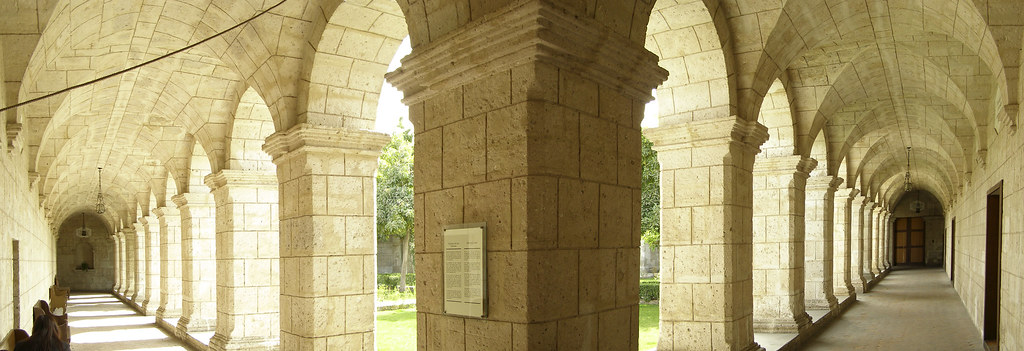
Renowned for its stunning blue sky, its towering volcanoes and lush vegetation in the valley, the White City encourages Peruvians and foreigners alike to come and see two ancient cloisters that now function as museums.

The itinerary may take from three hours to an entire day: it all depends on your interest and available time. The trip involves two convents that will take you to the past and provide you with a perspective of the beliefs of Peruvian societies of past ages.


Colonial Treasure
During the day you can visit the Convent of Santa Teresa, which was built in 1700 and received women from different social strata who wanted to devote their lives to prayer.

Upon entering its five rooms open to the public, you can feel the loneliness they felt and their strength during the long years of confinement.
Even though this was a modest convent, inside, magnificent works of religious art, depicting the Nativity and the most important scenes of the life of the Lord are displayed.

Jewelery works in gold and silver are displayed in what was formerly the infirmary. Eighteenth century sculptures adorn the halls and classrooms.
In addition the site has a spectacular colonial architecture, with original vaulted ceilings, walls made of volcanic rock (sillar) and small gardens where one can only hear the birds singing.

The silence lingers in Santa Teresa, since currently, 21 nuns remain in this cloister that will soon be 300 years old.


The mysterious convent
The monastery of Santa Catalina, known as one of the most important tourist attractions in Arequipa, is the next place on the itinerary.

To walk in the footsteps of women who dared to surrender entirely to God, leaving family and friends behind, is extremely interesting. But visiting it at night makes an entirely different experience: much more dramatic and spiritual.
We believe that that is the reason that led to its opening during the night twice a week (Tuesday and Thursday). We recommend you enter at 6 p.m. so that you can visit its 21 rooms and beautiful plazas and walkways illuminated by the moonlight.

It was August 15, 1970 when this convent opened its doors for the first time to the public and presented 400 refurbished pieces, dozens of works from the Cuzco School and an important collection of religious art.

According to the story, cells were built for the nuns due to the earthquakes, where currently equipment and utensils from that time are in exhibition.

The local guides explained that some of the nuns decided on the closure because of an impossible love, a marriage that they did not wish to realize or because they lacked maternal vocation. We know, too, that they came from wealthy families and some were interned along with their maids so that they would wait on them.

Its architectural style is colonial, but emphasizes the fusion of Spanish and Indian elements and its gardens suggest a stay of hours with a good book.

Santa Teresa Convent
Melgar 303, Historic Center of Arequipa.
Monday through Saturday: 9 a.m.-5 p.m.
Sunday: 9 a.m.-1:00pm.
Entry is 10 soles, 5 soles for students.

Santa Catalina Convent
Santa Catalina 301, Historic Center of Arequipa.
Monday, Wednesday, Saturday and Sunday: 8 a.m.-5 p.m.
Tuesday and Thursday: 8 a.m.-8 p.m.
Entry is 30 soles.

Tour Suggested:

Saturday, April 24, 2010

Peru eyes to double annual cruise ship arrivals

Peru is keen to boost its tourist sector increasing the number of tourist cruise ships arrivals from 30 to 60 each year, Peru’s Minister of Foreign Trade and Tourism Martin Perez reported Thursday.

Paasengers od these cruise ships dock at Callao’s port take a tour around Lima city, but the idea is to make them visit other places such as Pisco (Ica) and Salaverry (La Libertad).
"In this way, tourists would stay longer. We will be addressing that issue in the coming months to attract tourists from around the world," he said.
Minister Perez will be heading to the United States in June to hold a meeting with Cruise Lines International Association (CLIA) and include those routes in the list of cruise ship destinations.
Minister Perez noted that Panama has already offered its support to Peru in this area as it is one of the world leaders in cruise business.
The 30 cruise ships that annually arrive into Peru's main ports contribute with an average 40 million dollars, this number is expected to double as the number of cruise ships arrivals increases.
These ships arrive between October and April with an average of 3,000 passengers who stay 12 days.

Friday, April 23, 2010

Relax and surf: Peru offers the beaches of Pacasmayo

Growing up in Lima, on the coast, made going to the beach part of my regular life. It’s sad that the beaches in Lima aren’t that good unless you drive 40 minutes south. So the idea of going up north to look for a nice beach within walking distance of my accommodation sounded appealing.
Relax and surf: Peru offers the beaches of Pacasmayo
A beach at Pacasmayo.

For most people, the best beaches are way up north in Máncora. I agree, but it’s a long drive, 16 hours. I had only the weekend and a long bus ride wasn’t my idea of fun. So I was open to new ideas.

I went to buy a bus ticket and it was right there where I made a decision. The destination would be: Pacasmayo, about 10 hours from Lima. Pacasmayo seemed to be what I was looking for: a laid back beach town, not crowded, but still lively and most importantly sunny, warm and with an endless beach. The only thing I knew for sure about it was that there’s a huge cement factory called Cementos Pacasmayo. I was thrilled of the idea of discovering somewhere new!
We left Lima at 7 p.m. It was a night bus, no options to see the landscape but no big deal since the Peruvian coast is mostly a desert. It was around 5 a.m. when we arrived to Pacasmayo. My first thought was: "This is definitely a small beach town."
Relax and surf: Peru offers the beaches of Pacasmayo

A small town with colonial touches
Coming from a city with more than eight million inhabitants, a town with about 27 thousand people was tiny, but they all are very friendly. They let me check in to my lodging although it was very early, just because they assumed I would be tired.
After a nap and a quick shower I was ready to explore the area. Streets are narrow, there are few cars but a lot of mototaxis, not only because of the small size of the town but also due to the warm weather which lasts all year long. It was really quiet. I was expecting a bright sunny day, but it looked a bit gloomy. The positive side: Walking around was more comfortable.
In Pacasmayo you will find very pretty colonial houses, similar to the ones you see in Trujillo. Unfortunately they are not that well preserved, but the charm is still there.
Sure, a beach town is different than small towns in highlands, just think about the houses with flat roofs. But I could also notice differences in the locals. I found people more outgoing and ready to talk to you, while in highlands they could be shy at the beginning. I think people in Pacasmayo are like the architecture of the area, a mix of lovely colonial buildings, nostalgia for a wealthy past, new buildings and high expectations for the future. Everyone seemed to know to each other here and I felt a bit like an outsider, but this feeling didn’t last very long thanks to the people’s warm welcome wherever I went.
Well, it was time to look for something to eat and I knew exactly what to get: a ceviche! I found a small and cozy place selling ceviche, which cost not even half the price of a similar dish in Lima.
Beach time
Pacasmayo is blessed with nice beaches, but there is one, El Faro, which is especially attractive for surfers. It wasn’t a big surprise seeing young people running to the beach to check the waves and then coming back carrying their boards. (One of the most popular and maybe also the biggest store was a surfshop.)
Surfing is becoming more popular in Peru, not only by Peruvians, but also foreigners looking for the perfect break. They like it here because it’s still uncrowded and there are plenty of places to discover. The best waves can be found from April to October. To entice surfers even more, the fishing village of Chicama has waves that stretch two kilometers wide, and is located 30 kilometers from Pacasmayo.
Next morning was Sunday and the sun came out very early, a perfect beach day. But first I went to the highest point in town to get a nice view. As in many other places in Peru, on top of the highest point there was a tall white Christ, arms wide open, like if he was guarding the whole town. From there I saw the pier and couldn’t help it walking along it, which is one of the longest in Peru.
The beach was getting crowded, mostly with locals who wanted to enjoy a quiet day. The only noise I heard came from the waves and children playing. After a couple of hours at the beach, sitting on the porch of the hotel with a cold drink and a book was perfect.
A tip: Pacasmayo is still a small town, so if you miss lunch time, you’d probably have to wait until dinner. Sunday evening is so quiet here. It seems to be everyone goes to bed early either to wake up early to start the work day or to look for waves.
Next morning I left Pacasmayo. There was no bus going to Lima, so I went to Trujillo and from there back to Lima. It was a great opportunity to walk around this lovely city. Pacasmayo will suit you if you want to stay away from the crowded beach areas and prefer a beach town lost in time.
Surfing information
Pacasmayo is recommended for experienced surfers. The best spot is El Faro beach.
Wave quality: World Class
Wave type: reef-rocky
Normal wave length: 300-500 meters.
How to get there
Go to Trujillo and make a connection to Pacasmayo. Buses from Lima to Pacasmayo don’t run often. (Trujillo is a lovely city and spending a few hours in this colorful city would be a wonderful idea.)
Relax and surf: Peru offers the beaches of Pacasmayo

Thursday, April 22, 2010

Peru to invite Sandra Bullock to boost tourism in Machu Picchu

As part of the campaign planned to boost tourism in Peru, authorities are assessing the possibility of inviting Oscar winner Sandra Bullock to visit Machu Picchu Inca citadel, alike US actress Susan Sarandon, Peru's Foreign Trade Minister Martin Perez said Tuesday.
“We are trying to contact her agents so she can join the group of famous people we seek to attract to Machu Picchu; our campaign continues,” he said.
Perez pointed out that the visit of famous American actress Susan Sarandon for the reopening of the Inca citadel had a huge impact overseas, which demonstrates that this type of campaigns produced positive results.
According to Peru's Export and Tourism Promotion Board (PromPeru), the visit of Susan Sarandon, had a great advertising impact of several million dollars, having international media coverage in different languages.
“The idea is that every 2 months we can attract one celebrity, and we will continue along this year,” he added.
Other future possibilities are Sting, lead singer and bassist of the rock music band The Police; American film director and film producer Steven Spielberg; and also Dominican singer Juan Luis Guerra.
Tour Suggested:

Wednesday, April 07, 2010

Machu Picchu receives some 1,500 tourists daily since reopening

The Inca citadel of Machu Picchu receives some 1500 visitors a day from Thursday, when it officially reopened to domestic and foreign tourists, reported the manager of the Archaeological Park of Machu Picchu Marco Palomino.

Most visitors are European -mainly French and British- and Latin American -Argentine and Brazilian. Domestic tourists are mainly from Lima.
"Visitors have great expectation of seeing Machu Picchu due to its status as one of the Seven Wonders of the World and the recent events," Palomino said adding that he noted the presence of families, young people and even seniors.

He said maintenance and restoration works were undertaken during the closure of the famous citadel, mainly in the area of mount Huayna Picchu.
According to Palomino, the Institutional Image Department of the National Institute of Culture (INC) in Cusco will soon issue a statement with further information on the subject.
Heavy rains caused the Vilcanota River to rise to its highest level in 25 years, flooding roads and destroying the railway near the famous Inca citadel, which forced the closure of this tourist attraction for the past two months.

Wednesday, March 31, 2010

Machu Picchu reopening celebrated with “Payment to the Earth” ceremony

The reopening of Machu Picchu Inca citadel, scheduled for Thursday, will be celebrated with a “Payment to the Earth” ceremony at the Explanade of the Koricancha Temple, located in the city of Cusco, south east of the country.

The event takes place at 20:00 hours (local time) and the organization is in charge of the Foreign Trade and Tourism Ministry and the Municipality of Cusco, Peru's Export and Tourism Promotion Board (PromPeru) reported.

Before these celebrations, they will screen images of the Imperial City and Machu Picchu in two big screens.

Then, the Inca and its entourage will appear accompanied by a group of musicians and dancers that will participate in the tribute to Pachamama Raymi or Mother Earth.

At the end they will exhibit fireworks and music bands will perform.

The reopening of Machu Picchu will represent a new stage in the recovery of tourism, started after the implementation of the campaign called “Cusco Pone.”

Friday, March 26, 2010

Machu Picchu, Amazon and Arequipa, best attractions of Peru, says The Telegraph

Machu Picchu, the Amazon River and Arequipa are the best attractions of Peru, according to an article published by British Telegraph and writen by Chris Moss, which offers a guide to the Andean country, ahead of this year's celebrations to mark the bicentenary of Latin America's fight for independence.

According to "Peru: a guide for beginners", the top six attractions are Machu Picchu (reopening in April, after recent floods), whether by train, trek or bus; Iquitos and the Upper Amazon river; and Arequipa, known as the ciudad blanca for its buildings made from pearly white volcanic material, and a Unesco World Heritage site.

Also the archaeological site of Chan Chan, including the ruins of the largest adobe city in the world; the high peaks of the Cordillera Blanca to see tropical glaciers and turquoise lakes on off-the-beaten-track hikes; and the mysterious, geometrical Nazca Lines, thought to have been etched into the stony desert as far back as 900BC.

For Chris Moss, Cusco is the best city of Peru because it has many impressive monasteries, churches and pre-Columbian buildings and is, as Che Guevara recorded in The Motorcycle Diaries, tangibly "the navel of the Inca world".

He also recommends tourists to buy a bottle of Peruvian pisco, the national firewater, and read Hugh Thomson's The White Rock, which deftly combines a history of the last days of the Incas with a gripping story about the search for lost cities buried in uncharted corners of the Sacred Valley.

Wednesday, March 24, 2010

Lima’s zoo: Showcasing wildlife of the coast, mountains and jungles of Peru

It’s only natural that Lima’s biggest zoo, Parque de la Leyendas or Legends Park, reflects the three geographic zones of the country: the coast, the mountainous sierra and the tropical selva, or jungle. Each region is rich in animals, birds and plants – the same spectacular variety, only on smaller scale, you’ll find on the territory of the zoo.

The entrance of the park is still partially under construction, but it is already an active business spot: souvenirs, water and snacks, soft toys, sunglasses and parasols are offered to the visitors who arrive to queue under the sun to get the tickets. Considering solid sun protection for those who plan to spend the whole day in the open air is a must: Lima’s sun touches your skin rather gently, but at the end of the day, to your surprise, you appear as red as a boiled shrimp. Once you get your adult ticket of 9 soles, you are ready to enter the Parque de la Leyendas wondering what kind of legends it may actually contain.

The park has historical treasures which you can see at the Earnest W. Middendorf Museum set within the zone of ancient settlements of the pre-Incaic Maranga culture. The large archeological complex has 52 excavations called huacas, which date back 700 years.

Yes, the Park of the Legends is a lot more than just a zoo: It is a big recreation complex with numerous museums, the Botanic Garden of 3.3 hectares displaying 1,800 varieties of plants, both native and from all over the world; well-kept gardens and lawns, ponds full of fish, and exquisite artificial waterfalls. The alleys are equipped with comfortable benches where you can take a rest and contemplate the beauty of nature. But most of all it’s a wonderful exhibition of the animal world.

Costa: Lively parrots, bats and armadillos

This zone is rich in birds representing 33 kinds of species. Families of parrots of all sizes are dressed in most wonderful combinations of red, blue, yellow, azure, green and orange. They are noisy things, fighters too – and watching them settle their conflicts as well as witnessing scenes of love and care, you have a clear picture of what their life in the nature is like.

A couple of modest brown birds attracted my special attention. Their cage had glass walls and was designed with a beautifully shaped rock covered with plants and a cascade forming a tiny pool below. The secret of these privileged conditions was revealed when I noticed a board near the cage: the lucky couple was adopted by one of the country’s major mobile operators.

Walking through the alleys of costa surrounded with typical plants of this region, you’ll see penguins diving into a pool, a deer, two kinds of armadillos with their impressive impregnable shells, a tiny bat whose main activity is eating fruit at night and hiding in the daylight (though I did manage to see the animal), a chinchilla with its big ears and a gorgeous grey fur-coat, a white rabbit, a hypnotizing sleek python and many more. And it’s just the beginning of your journey.

Thursday, March 18, 2010

PromPeru proposes tourist attractions to enjoy during Holy Week

The Holy Week is a time for meditation and religious fervor, but it can also be a good reason to enjoy a long holiday visiting some attractive destinations in the 25 regions of Peru.

For this occasion, PromPeru has created its website “Semana Santa 2010” (Holy Week 2010) where one can find information about places, tourist destinations, accommodation, routes, services, among other interesting information that will help travelers.

As for Peru's Tourist Information and Assistance Service (Iperu) will offer tourist information to all national and foreign travelers through its offices located in many departments of Peru.

Wednesday, March 17, 2010

ABOUT EARTH HOUR

Earth Hour started in 2007 in Sydney, Australia when 2.2 million homes and businesses turned their lights off for one hour to make their stand against climate change. Only a year later and Earth Hour had become a global sustainability movement with more than 50 million people across 35 countries participating. Global landmarks such as the, Sydney Harbour Bridge, The CN Tower in Toronto, The Golden Gate Bridge in San Francisco, and Rome’s Colosseum, all stood in darkness, as symbols of hope for a cause that grows more urgent by the hour.
Earth Hour - Chile

In March 2009, hundreds of millions of people took part in the third Earth Hour. Over 4000 cities in 88 countries officially switched off to pledge their support for the planet, making Earth Hour 2009 the world’s largest global climate change initiative.

Earth Hour 2010 takes place on Saturday 27 March at 8.30pm (local time) and is a global call to action to every individual, every business and every community throughout the world. It is a call to stand up, to take responsibility, to get involved and lead the way towards a sustainable future. Iconic buildings and landmarks from Europe to Asia to the Americas will stand in darkness. People across the world from all walks of life will turn off their lights and join together in celebration and contemplation of the one thing we all have in common – our planet. So sign up now and let’s make 2010 the biggest Earth Hour yet!.

It’s Showtime! Show the world what can be done.
Earth Hour - Light Writing
Earth Hour by WWF

Earth Hour is organized by WWF. With almost 5 million supporters and a global network in over 100 countries, it’s one of the world's largest and most respected independent conservation organizations. WWF’s mission is to stop the degradation of the Earth's natural environment and build a future where people live in harmony with nature.
Earth Hour timeline

Turn back the clock on Earth Hour and discover why, how, where and when it all started.
Why get involved?

Put simply, because our future depends on it!
Earth Hour - Lima Group

Earth Hour has done a lot to raise awareness of climate change issues. But there’s more to it than switching off lights for one hour once a year. It’s all about giving people a voice on the future of our planet and working together to create a sustainable low carbon future for our planet.
The future can be bright

New economic modelling indicates the world has just five years to initiate a low carbon industrial revolution before runaway climate change becomes almost inevitable. But it can be done, and the long term benefits will be enormous.

So now's the time to take a stand and give world leaders the mandate they need to make the right climate deal.

Tuesday, March 16, 2010

Peru announces Machu Picchu reopening in April

PromPeru today surprised ITB in Berlin by announcing the re-opening of the vital rail link to the ruins of Machu Picchu.

The line was severely damaged in heavy rains and floods which hit the country in January and eroded railway tracks between Cuzco, Ollantaytambo and the Inca citadel.

Following the successful completion of track repairs ahead of schedule, it has been confirmed that, weather permitting, PeruRail will recommence its Vistadome train service to Aguas Calientes , the station for Machu Picchu Pueblo, on March 29.

The Inca Citadel of Machu Picchu will reopen to tourists on April 1, travelmole.com reports.
Initially train services will operate between Pisacucho, a station beyond Ollantaytambo, and Aguas Calientes, with a replacement bus service from Wanchaq Station in Cuzco bringing passengers by road to Pisacucho.

The train journey will take 1 hour 20 minutes and the drive approximately 2 hours 30 minutes.
It is estimated that it will be possible to make the entire journey from Poroy station in Cuzco to Machu Picchu by rail from July 2010, subject to favourable weather conditions.

PeruRail also operates a backpacker service and the luxury Hiram Bingham train between Cuzco and Machu Picchu.

The backpacker train will resume at the end of April and the Hiram Bingham will be back in operation at the end of June.

Wednesday, March 10, 2010

Tourists from Chile, US, France, Spain the most loyal to Peru


Tourists from Chile, the United States, France and Spain are the most loyal to Peru, with visits increasing last year despite the international financial crisis that hit this activity worldwide, stated Tuesday Peru’s Ministry of Foreign Trade and Tourism (Mincetur).
“While tourism decreased worldwide last year, the arrival of tourists from Chile, the US, France and Spain kept increasing, since they regard Peru as an unmissable destination worth visiting,” said Deputy Tourism Minister, Mara Seminario.
She highlighted that during the global financial crisis, South American tourists preferred a closer destination and visited Machu Picchu, one of the new world’s seven wonders.
Besides, Spanish and French tourists decided to continue with their plans of visiting Peruvian destinations because they praise culture value.
According to a Mincetur’s report based on the data from Peruvian General Directorate of Immigration and Naturalization (Digemin), Peru received last year 2 million 23,967 foreign tourists, a 3.9% growth.

Suggested Peru Tours